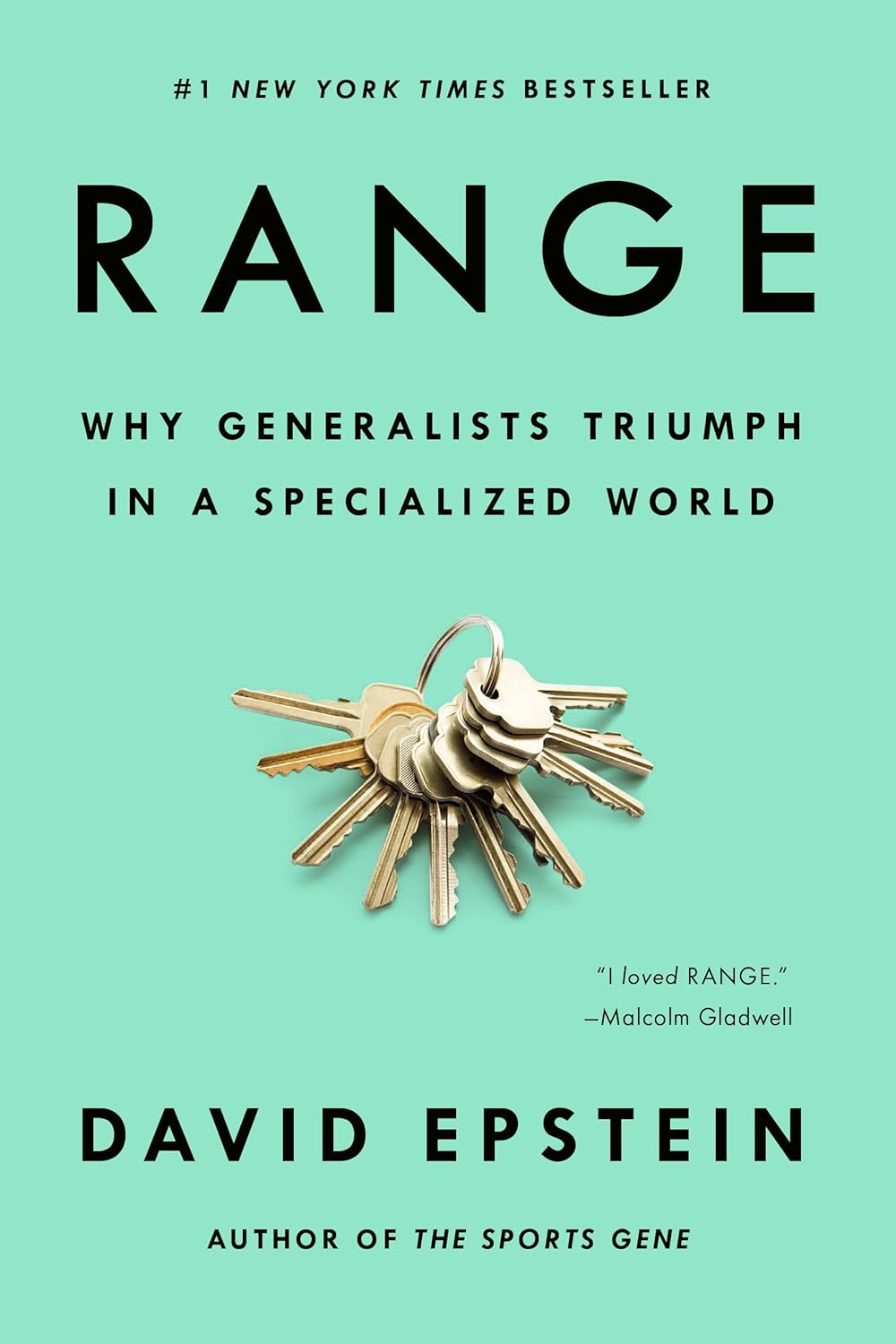

Rethink linear thinking/progression My biggest takeaway from this book is the importance of non-linear thinking. I've heard this concept million times, particularly from the book "10x is Easier than 2x." However, I couldn't help but feel down when encounter some detours in my career and life choices, and it happens a lot! I fall behind and compare myself to others, I know I should not do, but... 🤷 The book's pushback on "10,000-hour rule" and the idea that more experience automatically leads to better judgment and prediction is a big relief to me. It reminded me that every detour and experience count, it might sound cliche tho, but they do contribute to our growth and development. How do we measure our progress when it isn't linear? Well, It is difficult, that's why we usually don't do this way. Similar to the compounding effect, the human mind struggles to comprehend it easily. I have yet to find a way that works perfectly. One way works for me is to consider the probability, similar to trading in stock market. There is no guaranteed way to win, as everything can change in an instant. Instead, we rely on probabilities, calculate the potential TAM(totally addressable market cap), ROI (return on investment) etc. We also practice risk management and hedge our exposure. And last but not least, it is always wise to keep some cash on hand in case of a "black swan" events.