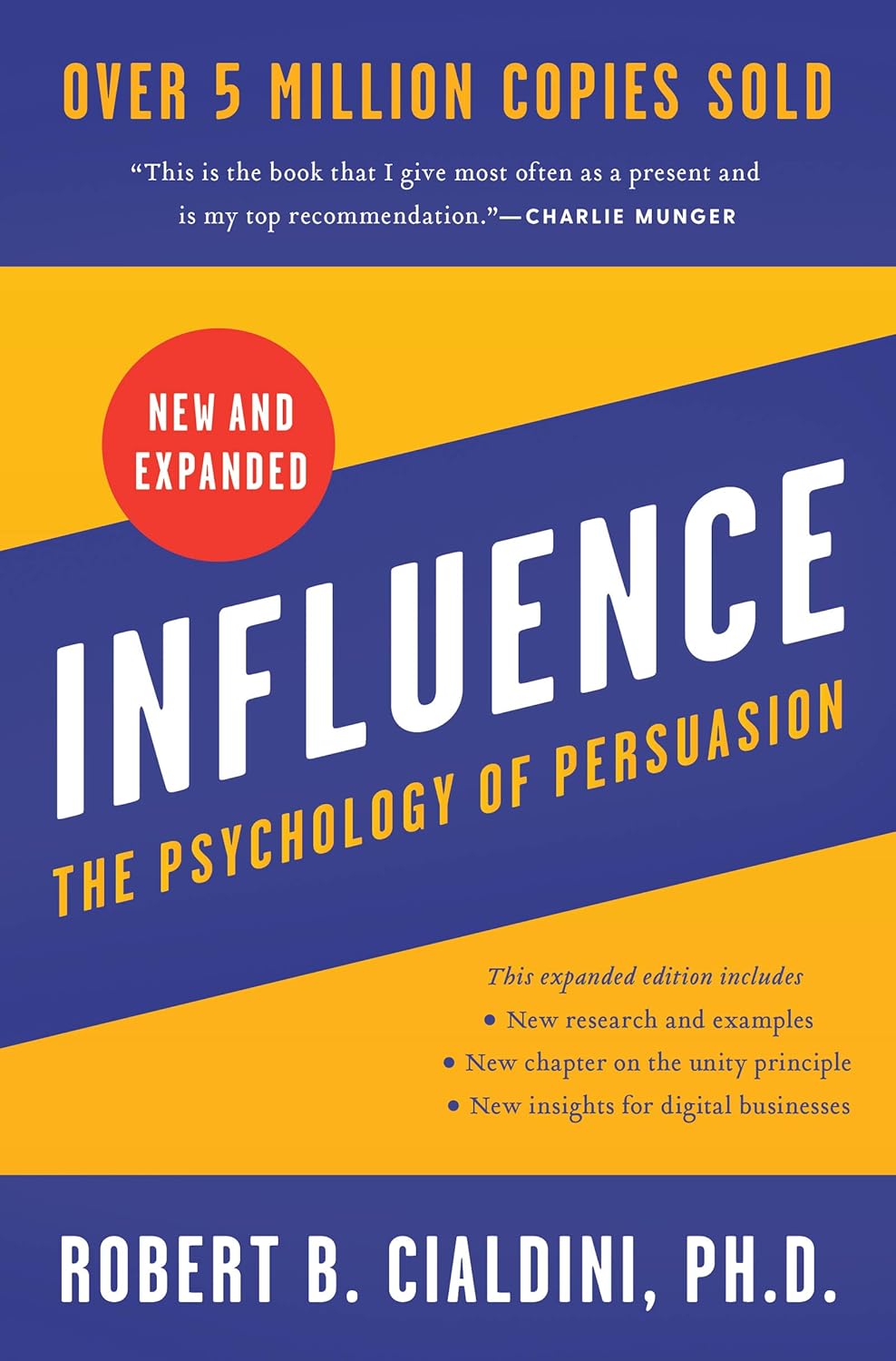
Influence, New and Expanded: The Psychology of Persuasion
作者
Robert B Cialdini PhD
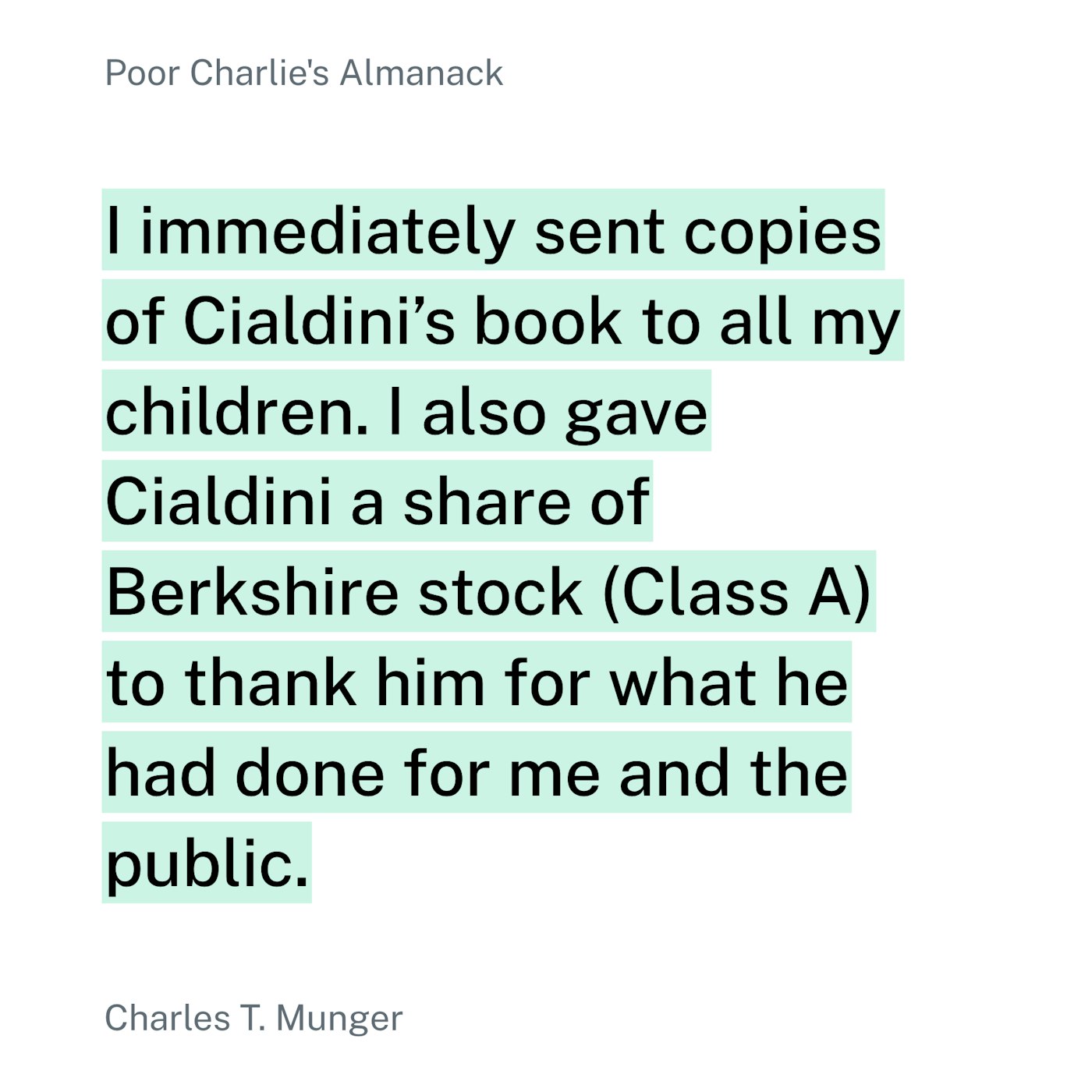
在我们上期读书会阅读的《穷查理宝典》中,查理芒格精彩的最后一讲(talk11)揭示了"人类误判心理学"。这章可以说是全书的一个精华,甚至是最重要的一个演讲。有趣的是,这一章节是芒格老先生在几十年前总结出来的"行为经济学",这早于后来出现的系统行为经济学学科。之所以芒格老先生能够如此"领先",除了他本人多年的投资和观察经验,也取决于他受到一本书的影响。这本书就是我们本期读书会的: Influence, New and Expanded: The Psychology of Persuasion;
从最开始这几个故事中,我下意识地开始想自己有没有‘上当受骗’的经历。是否买了贵的东西,是否活在自己对外界的刻板印象框架中。答案显然是肯定的,有点沮丧。但是提醒我也自己我不应该总把自己放在被动接受的位置上,于是我给自己定了一个目标,或者说在这本书中我想找到的答案--先发制人来影响别人 -ch2 一点小感悟:单纯的give是没有用的,得ask呀! about the Krishnas soliciting, I don't see it this way, people run away not because they know this will work, 100% and pay for things unnecessary, it’s more like, people don’t want to be rude, or avoid some chaos they can already predict. But I will just be rude, I’m okay to be rude lol. some more thought related: The first generation who wants to change the family relationship is the hardest. Because the traditional way is built on give and payback which is enforced by moral pressure. But when you know that’s not a proper way to live and carry your kid. You have to be rude. After all the tactics in this chapter, my concern is whether can you maintain a good relationship with whoever you 'tricked'. I'll find out.